
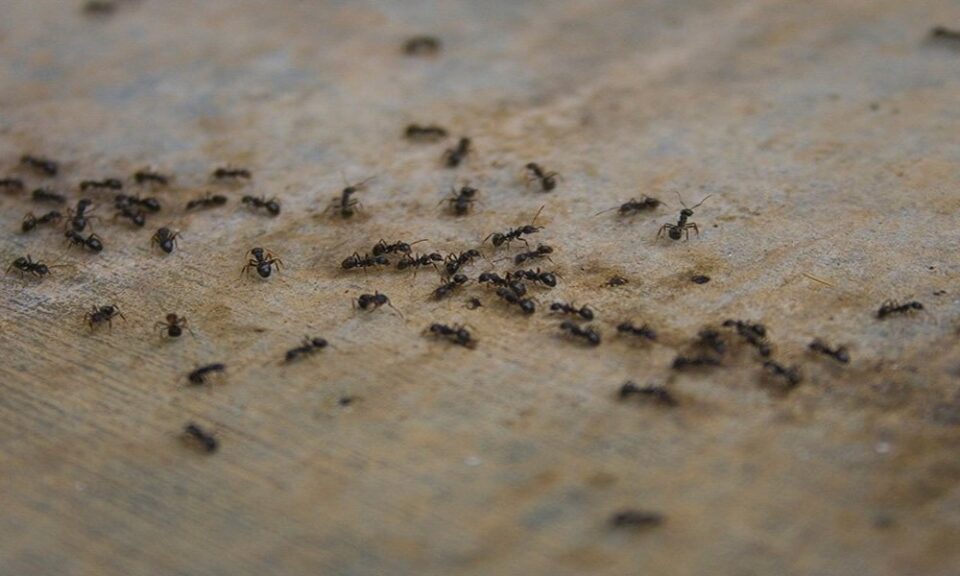
If you live in Lake Elsinore and feel like the ant problem never really ends, that’s because it largely doesn’t. What changes is the species, the entry point, and the colony behavior – not the underlying pressure. Main Sail Pest Control serves the Lake Elsinore area and the surrounding Inland Valley communities, and ant control is one of the most consistent calls we receive regardless of season. Understanding why Lake Elsinore specifically struggles with ants year-round – and why some approaches make the problem worse rather than better – helps homeowners make smarter decisions about how to handle it.
The Geography and Climate That Keep Ants Active in Lake Elsinore
Lake Elsinore sits in the Elsinore Valley surrounded by hillsides, open chaparral, and undeveloped terrain that provides ideal ant habitat. The combination of warm temperatures, dry summers, and mild winters means ant colonies in this region never fully go dormant the way they do in colder climates further north or at higher elevations.
During summer, ant colonies don’t retreat – they expand. When temperatures in the valley climb into the 90s and triple digits, ants forage further and more aggressively looking for water. Homes with irrigation systems, dripping outdoor faucets, or moisture around foundation perimeters become high-value destinations. The foragers aren’t just looking for crumbs; they’re seeking water, and Lake Elsinore’s dry summer heat drives that behavior harder than in coastal communities with marine influence.
During winter, the pattern shifts but doesn’t stop. Ants in the Inland Valley remain active throughout the year, adjusting behavior as temperatures drop. Cooler nights push some species to seek warmth inside structures. Rain events – and Lake Elsinore gets concentrated rainfall during the winter months – drive ants out of saturated soil and into buildings through any gap they can find.
The result is a year-round cycle: summer heat drives foraging for moisture, winter rain drives displacement into structures. For homeowners along the lakeside communities, hillside developments, and neighborhoods bordering the Santa Rosa Plateau or the Cleveland National Forest boundaries, that pressure is compounded by proximity to natural habitat that supports enormous ant populations.
The Species You’re Actually Dealing With
Most Lake Elsinore homeowners assume an ant is an ant, but the species present affects both how infestations develop and how they should be treated.
Argentine ants are by far the most common pest ants throughout Southern California, and Lake Elsinore is no exception. These are the small, fast-moving dark ants that form trails and seem to appear overnight in kitchens, bathrooms, and around pet food bowls. Argentine ants are unusual among ant species in that they form super-colonies – multiple interconnected nests that share workers and queens – which can extend over an enormous geographic area. A typical ant colony has one queen; an Argentine super-colony can have thousands. This is why wiping out a trail of Argentine ants with a spray doesn’t eliminate the problem. You’ve killed a few hundred workers from a colony that has millions.
Pavement ants are the other common species in residential Lake Elsinore – recognizable by the small volcano-shaped mounds they push up through cracks in driveways, sidewalks, and along foundations. They tend to be more localized than Argentine ants and don’t form super-colonies, but they’re persistent around any area where food debris accumulates.
Fire ants are present in parts of Southern California, though they’re less uniformly distributed in the Elsinore Valley than in some other inland regions. When fire ants are the culprit – identifiable by their painful stinging sting and distinctive dome-shaped mounds – the treatment approach is different from standard ant control, and misidentification leads to failed treatment.
Why Over-the-Counter Sprays Make Argentine Ant Infestations Worse
This is the piece most homeowners find counterintuitive: using consumer ant sprays on Argentine ant trails typically makes the problem more severe, not less. Here’s why.
Argentine ants navigate and communicate through pheromone trails – chemical signals left by foragers that guide other workers to food or water sources. When you spray a trail with a contact insecticide, you kill the workers on that trail. But the chemical disruption to the pheromone trail is interpreted by the colony as a threat to that route. The colony responds by producing more queens and splitting – a process called budding – which creates new sub-colonies that establish themselves in different locations around your home.
A colony that was concentrated near your kitchen can become a distributed infestation across multiple rooms and entry points after repeated spray attempts. The colony doesn’t die; it disperses and diversifies. This is why homeowners who have been spraying for months often describe the problem as “spreading” rather than improving.
The products available at hardware stores also lack the residual duration of professional-grade treatments and can’t be safely applied in the wall voids, attic spaces, and foundation gaps where ant colonies actually nest. Treating the trail without treating the source is a temporary interruption, not a solution.
What Professional Ant Treatment Actually Does Differently
Effective ant control requires treating the colony through the foragers, not in spite of them. Professional treatments use baiting products and non-repellent insecticides that foragers pick up and carry back to the colony, where the treatment is distributed through shared feeding behavior to workers, queens, and larvae.
Non-repellent chemistry is key. If a forager detects a repellent chemical, it avoids it – the colony routes around the treated area and continues feeding elsewhere. Non-repellent products are undetectable to the foragers, so they walk through treatment zones, pick up the active ingredient, and bring it back to the colony. Over the course of several days, colony populations decline from the inside out.
The second component is perimeter treatment – a barrier application around the foundation, entry points, and landscape areas that prevents new foragers from establishing trails into the structure. This has to be maintained on a schedule because the products have a residual lifespan, after which pressure from the surrounding environment resumes.
This is the core of what a recurring pest control plan does that a one-time treatment cannot: it maintains an active barrier through the seasonal cycles that drive ant pressure in the Elsinore Valley – the dry summer foraging peaks, the rain-driven winter displacement, and the spring activity surge that precedes summer.
Why Ant Pressure Demands a Recurring Plan in Lake Elsinore
A single treatment in June can produce visible results within a few weeks. But by September, the perimeter barrier has degraded, summer heat is at its most intense, and ant colonies from the surrounding hillsides are at their largest annual population. By December, winter rains are displacing those colonies toward structures. Without a maintained barrier, the cycle restarts every few months.
Main Sail Pest Control’s recurring plans for Lake Elsinore homeowners maintain that perimeter protection through the seasonal shifts that drive ant activity in this specific valley. Monthly, bi-monthly, and quarterly options are available depending on the property’s pressure level, and the free retreat guarantee means that if ant activity appears between scheduled services, we come back at no charge to address it.
If ants are a recurring frustration in your Lake Elsinore home, contact Main Sail Pest Control for a same-day inspection. We’ll identify the species, assess the entry points, and set up a treatment plan that fits both your home and the seasonal patterns that drive ant behavior in the Inland Valley.
