
Most clogged drains get one of two bad treatments. Some get a bottle of the harshest cleaner in the cabinet and a hopeful wait. Others get the biggest machine on the truck when a plunger and five minutes would have solved it. Both cost money, and the first one slowly wears on the pipes it was supposed to help.
A better way to think about clogs is as a ladder. You start at the bottom with the gentlest fix and only climb when the drain shows you the problem sits deeper than your tool can reach. Homeowners in Modesto and Turlock who have called ClearPath Plumbing and Drain Cleaning Solutions tend to hear a version of this same thinking, because an honest look at the line usually settles which rung a house actually needs. The rest of this guide climbs that ladder one step at a time.
Let the Drain Tell You Where to Start
Before reaching for anything, notice where the trouble shows up. One slow bathroom sink with every other fixture flowing fine points to a clog in that sink’s trap or the short arm behind it. That is bottom rung territory.
Things change when several fixtures misbehave together. If the tub backs up when the toilet flushes, or the toilet gurgles while the washing machine drains, the blockage is likely in the main line that every fixture shares. A sewage smell rising from a shower or floor drain says the same thing. In those cases, plunging the kitchen sink won’t touch the real problem, and it’s smarter to skip ahead.
The First Two Rungs Fit Under Your Sink
Rung one is the plunger and hot water. It sounds basic, but technique matters. A flat cup plunger suits sinks and tubs, while a flange plunger with the extra rubber collar seals into a toilet bowl. On a bathroom sink, stuff a wet rag into the overflow hole so the pressure pushes on the clog instead of escaping. On a double kitchen sink, block the second basin for the same reason. Follow up with very hot tap water rather than boiling water, since boiling water can soften PVC joints and crack cold porcelain.
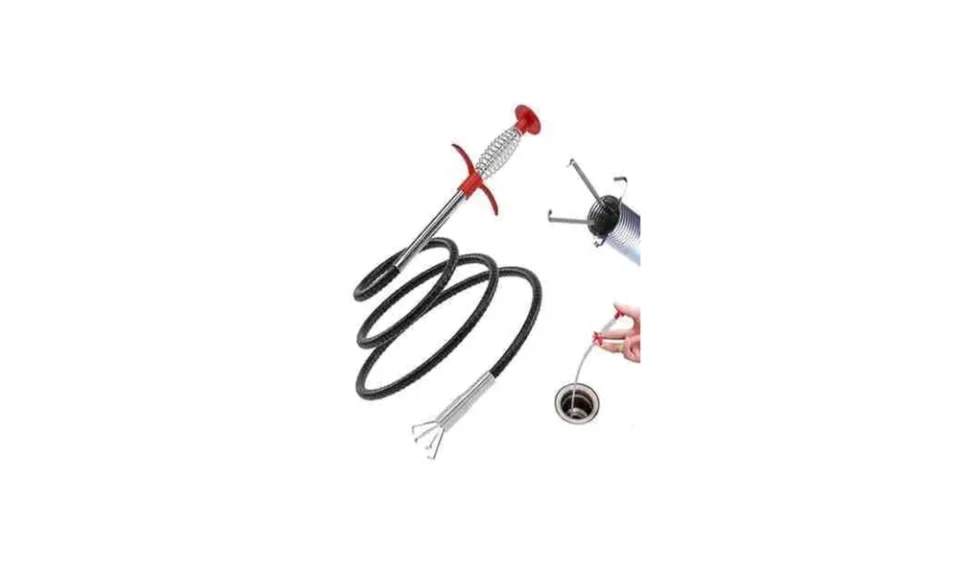
Rung two means getting your hands closer to the clog. Pulling a P-trap takes a bucket, a towel, and maybe a pair of channel locks, and it solves a surprising number of kitchen clogs. For bathroom sinks and tubs, a cheap barbed plastic strip will pull out the hair and soap mat that causes most slow drains. Enzyme cleaners belong here too, though they work best as monthly upkeep rather than a rescue.
Caustic drain chemicals don’t make the ladder at all. They generate heat inside the pipe, can damage older metal drains and fixture finishes, and if they fail, someone has to open a trap full of chemical sludge.
Where Steel Cable Takes Over
Rung three is the hand auger. A drum auger with a thin cable reaches past the trap into the branch line, usually 15 to 25 feet. A toilet auger is a separate tool with a protective sleeve that keeps the cable from scratching the porcelain. Most homeowners can handle both, carefully.
Rung four is the motorized cable machine, fed through an outdoor cleanout into the main line. Cutting heads chew through tree roots, wipes, and packed debris. This is where many professional calls end, and for a one-time blockage it works well.
The catch is that a cable punches a hole through a clog rather than clearing the full width of the pipe. Grease and roots left along the walls start rebuilding right away. That matters in Modesto’s older neighborhoods, where mature street trees grow beside clay sewer laterals with joints every few feet. Roots find those joints, and if your main line needs cabling every year, that pattern is a message worth listening to.
The Rung That Cleans Nothing at All
Rung five is a camera inspection, and it often saves more money than any other step. A waterproof camera pushed down the line shows what the cable only felt. It can reveal roots at specific joints, a belly where the pipe has sagged and holds standing water, offset joints from shifting soil, cracks, thick grease shelves, or scale narrowing the pipe.
Ask for a camera look after any repeat clog, before buying an older home, and before anyone runs high-pressure water through a line of unknown condition. A good plumber will show you the footage and point out what matters. Ask for a copy of the recording, too, since it becomes a useful baseline for later.
Water and Chain at the Top
Rung six is hydro-jetting. A specialized nozzle sprays water at several thousand PSI, with jets angled backward so the hose pulls itself forward while scouring the entire circumference of the pipe. Instead of poking a hole, it strips grease, soap scum, sludge, and fine root growth off the walls and flushes all of it downstream. Kitchen lines clogged by years of cooking grease are the classic candidate. The camera step matters here, because a cracked or collapsing pipe shouldn’t take that kind of pressure.
Rung seven is descaling, aimed mostly at cast iron drains. Over decades, the inside of cast iron builds up rough, lumpy corrosion that snags paper and debris, shrinking the usable opening. Many mid-century homes around the Central Valley still run on these original drains. Spinning chain knockers or milling heads grind that buildup back down and restore the pipe’s diameter. Descaling is sometimes the prep work before an epoxy lining, and sometimes it simply buys the pipe more years.
When Climbing Stops Being the Answer
At some point, cleaning turns into maintenance on a pipe that has already failed. A collapsed section, a deep belly, a line split by roots, or old bituminous fiber pipe found in some postwar homes won’t be cured by any amount of cabling or jetting. That’s when sectional repair or repiping replaces the ladder entirely. Paying for the same cleaning every year on a broken line is usually the most expensive choice in the long run.
Living Closer to the Bottom Rung
The goal isn’t to master every tool. It’s to need fewer of them. A few habits keep most homes near the plunger end of the ladder.
- Pour cooled grease into a can or jar instead of down the sink, even with the disposal running
- Keep mesh strainers in tubs and showers, and clean them weekly
- Treat “flushable” wipes as trash, since they don’t break apart like toilet paper
- Run cold water with the garbage disposal and keep fibrous peels and coffee grounds out of it
- Learn where your outdoor sewer cleanout is before you need it
- Schedule a camera inspection every few years if your home is older or sits near large trees
A drain rarely goes from fine to flooded overnight. It slows, gurgles, and smells first. Catching those signals early, and matching the fix to the actual depth of the problem, keeps small jobs small and leaves the heavy equipment for the days it truly earns its place.
